Why Continuous Learning is the New Retirement Plan

The traditional retirement model is broken, and it's time we acknowledged it. The idea that you work the same job for 40 years, collect a pension, and fade into irrelevance at 65 is not just outdated—it's dangerous. Social Security's funding model isn't sustainable, entire industries are being disrupted overnight, and the very nature of work is evolving at breakneck speed. But instead of panicking about these changes, what if we viewed them as an opportunity to redefine what it means to age, work, and retire in the 21st century?
The answer lies in a simple but revolutionary concept: learning is the new retirement planning.
From Widgets to Wisdom: Understanding the Economic Shift
We're witnessing the transition from the Third Industrial Revolution to the Fourth, and the implications are staggering. The Third Industrial Revolution was built on manufacturing, standardization, and repetition. Success meant showing up, following instructions, and producing widgets efficiently. Workers could master a skill set in their twenties and coast on that knowledge for decades.
The Fourth Industrial Revolution operates on entirely different principles. The currency is no longer physical output—it's intellectual property, creativity, adaptability, and the ability to synthesize information in novel ways. Artificial intelligence and automation are handling the routine tasks, leaving humans to focus on what we do best: think critically, solve complex problems, and create meaningful connections.
This shift isn't coming—it's here. Hundreds of thousands of people have already been displaced from jobs they thought were secure, not because they weren't good at what they did, but because they were doing the same thing the same way every day. In today's economy, predictability is vulnerability.
The Cognitive Health Crisis We're Not Talking About
There's another factor at play that previous generations didn't face: the modern epidemic of cognitive decline. Our great-grandparents and grandparents didn't experience dementia and Alzheimer's at today's rates. They didn't face the same prevalence of cognitive diseases that we're seeing now. What changed?
While genetics and environmental factors certainly play a role, there's mounting evidence that cognitive decline is partly a use-it-or-lose-it phenomenon. Our brains are incredibly powerful organs capable of remarkable adaptation throughout our lives—a concept scientists call neuroplasticity. But like any muscle, when we stop challenging our brains, they begin to atrophy.
Previous generations lived in a world that naturally exercised their cognitive abilities. They solved problems daily, adapted to changing circumstances without digital assistance, and engaged in complex social interactions without the mediation of screens. They didn't outsource their memory to smartphones or rely on algorithms to make decisions for them.
Today, many people have fallen into cognitive autopilot. They wake up, follow the same routine, perform the same tasks, consume the same content, and go to sleep. Their brains, desperate for stimulation and challenge, begin to stagnate. The neural pathways that aren't being used start to break down, potentially contributing to the cognitive diseases we're seeing with increasing frequency.
But here's the encouraging truth: it's never too late to start building new neural pathways. When we engage in learning—really learning, not just passive consumption—our brains literally rewire themselves. The process can even be physically uncomfortable at first, like a mental workout that leaves your head feeling stretched and challenged. But that discomfort is growth.
Redefining Retirement: From Ending to Beginning
The word "retirement" itself needs an overhaul. It implies withdrawal, endings, and irrelevance. But what if we thought of it as graduation instead? What if turning 65 (or 55, or 70) wasn't about slowing down but about shifting gears into a new phase of contribution and exploration?
Consider the possibilities: after decades of building expertise and wisdom, older adults are perfectly positioned to become teachers, mentors, innovators, and creators. They have the life experience to see patterns that younger people miss, the financial stability to take creative risks, and the perspective to focus on meaningful work rather than just profitable work.
The key is preparation—not just financial preparation, but intellectual and creative preparation. Instead of counting down the days until retirement, we should be counting up the skills we're acquiring and the mental muscles we're building.
The Learning Imperative: Skills for the New Economy
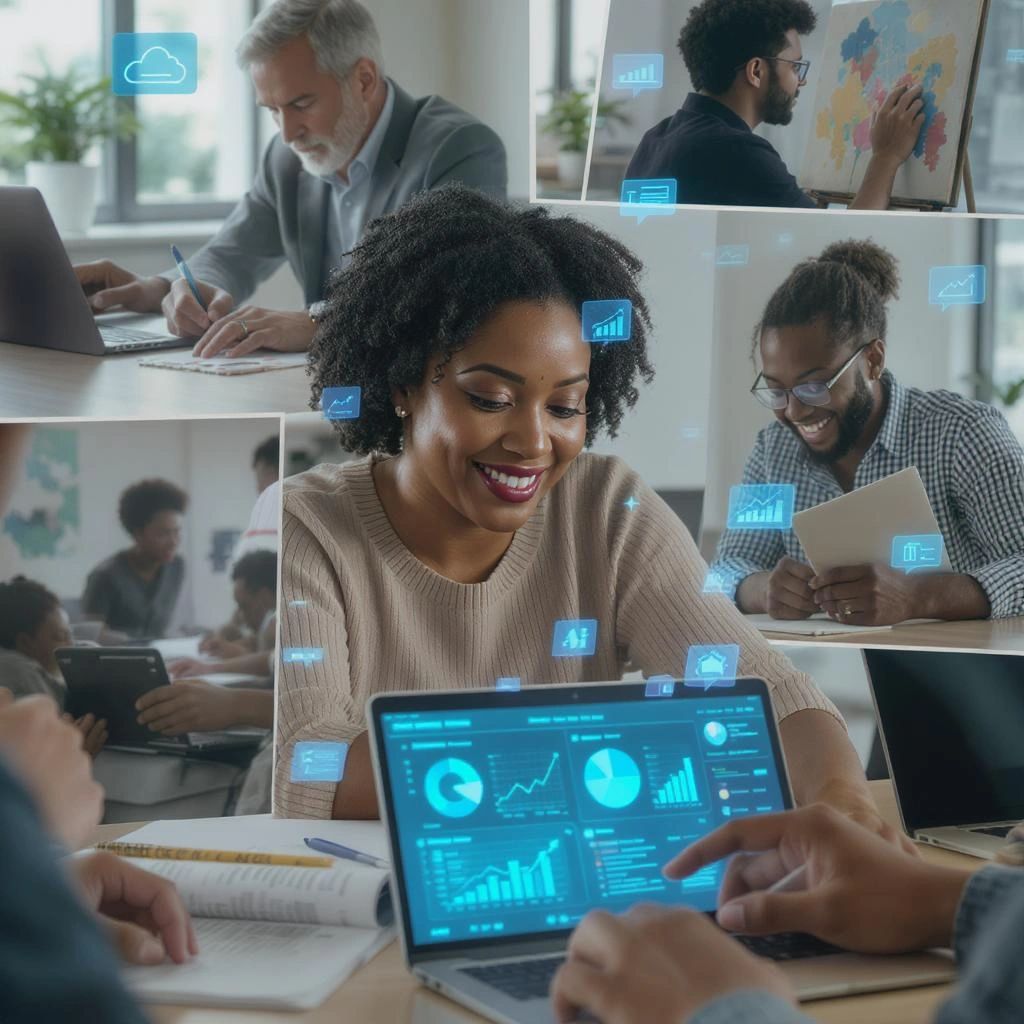
So what should people be learning? The answer isn't necessarily coding or data science (though those can be valuable). The most important skills for the future economy are fundamentally human:
- Critical Thinking and Problem-Solving: The ability to analyze complex situations, identify patterns, and develop creative solutions. This isn't about memorizing facts—it's about learning how to think about thinking.
- Adaptability and Learning Agility: The capacity to quickly acquire new skills and adjust to changing circumstances. In a world where the half-life of skills is shrinking, the ability to learn itself becomes the most valuable skill.
- Creative Synthesis: The power to combine ideas from different domains in novel ways. As AI handles routine tasks, humans who can make unexpected connections and generate original ideas become increasingly valuable.
- Emotional Intelligence and Collaboration: Despite increasing automation, the need for genuine human connection and collaborative problem-solving continues to grow.
- Digital Fluency: Not necessarily becoming a programmer, but understanding how to leverage technology authentically and effectively. This includes learning to work with AI as a collaborative partner rather than viewing it as a threat.
Real-World Success Stories
Learning-powered reinvention isn't theoretical—it's happening right now. Consider Marcus, a technical professional who realized his 9-to-5 job wasn't fulfilling his creative needs. Instead of accepting dissatisfaction, he began creating music with his children, leveraging AI tools to enhance their compositions. Today, his music is available on Apple, Spotify, and YouTube. His day job provides stability while his evening creativity provides purpose and additional income streams.
Or take the example of Elena, who at 61 decided to take accelerated entrepreneurship classes at Wharton and game design courses at MIT. Age didn't limit her ambition—it informed it. The combination of life experience and fresh learning created opportunities that wouldn't have existed with either element alone.
These aren't exceptional cases—they're previews of what's possible when we abandon ageist assumptions about learning and growth.
Practical Pathways: Where to Start

The beauty of continuous learning in the digital age is accessibility. You don't need to quit your job or spend a fortune to begin retooling your skills:
- University Programs: Prestigious institutions like Wharton's Entrepreneurship Acceleration Program offer accelerated learning opportunities specifically designed for working professionals and those planning their next chapter. Many universities now offer online certificates and degree programs designed for working adults. The stigma of "going back to school" has largely disappeared.
- Massive Open Online Courses (MOOCs): Platforms like Coursera partner directly with top universities to offer courses on everything from artificial intelligence to creative writing, often with the option to earn certificates or even degrees. edX and Udacity provide similar high-quality educational experiences.
- Professional Development Platforms: LinkedIn Learning, Skillshare, and MasterClass provide practical, career-focused education that you can consume at your own pace. Mindvalley also offers innovative approaches to personal and professional development, though with a more sales-oriented approach.
- Creative Platforms: YouTube, Patreon, and other platforms offer incredible learning opportunities in creative fields, often taught by practitioners rather than just academics.
- Local Maker Spaces and Community Centers: Hands-on learning through workshops, maker spaces, and community programs can provide both skills and social connection.
- Mentorship and Reverse Mentoring: Pairing with younger colleagues to learn new technologies while sharing your experience creates mutual benefit.
The key is to start somewhere and build momentum. Learning doesn't have to be formal or expensive—it just has to be consistent and challenging.
The Meditative Power of Creation
There's something profoundly satisfying about creating something new. Whether it's music, writing, coding, crafting, or building, the act of creation puts us in a state that psychologists call "flow"—complete absorption in meaningful activity. Time seems to disappear, stress melts away, and we feel most authentically ourselves.
This isn't just pleasant—it's neurologically beneficial. The meditative state that comes from deep creative work actually changes our brain chemistry, reducing cortisol (stress hormone) and increasing dopamine and endorphins (feel-good chemicals). It's natural medicine for both mind and body.
Some people find this flow state in traditional crafts like crocheting or woodworking. Others discover it in high-tech pursuits like 3D printing or app development. The medium matters less than the engagement. What matters is finding your personal spark—that activity that energizes rather than drains you.
Building Your Learning Portfolio
Just as we've traditionally built financial portfolios for retirement, we need to start building learning portfolios for the future. This means diversifying our intellectual investments across multiple domains:
- Core Professional Skills: Staying current in your primary field while anticipating where it's heading.
- Adjacent Skills: Developing capabilities that complement your main expertise. For example, a marketer learning basic data analysis or a teacher exploring educational technology.
- Creative Outlets: Pursuing activities that stimulate different parts of your brain and provide emotional fulfillment.
- Physical and Mental Health: Understanding nutrition, exercise, meditation, and other practices that maintain cognitive function.
- Financial and Digital Literacy: Developing the skills needed to navigate an increasingly complex financial and technological landscape.
The goal isn't to become a master of everything, but to maintain cognitive flexibility and creative problem-solving abilities across multiple domains.
The Social Dimension: Learning Together
Learning doesn't have to be a solitary pursuit. In fact, some of the most effective learning happens in community. Whether it's joining a book club, participating in online forums, attending workshops, or collaborating on projects, learning with others provides accountability, diverse perspectives, and social connection.
Consider starting or joining learning groups in your workplace, neighborhood, or online communities. Share what you're discovering, ask questions, and teach others what you know. Teaching is one of the most powerful ways to solidify your own understanding while contributing to others' growth.
Overcoming the Barriers
The biggest obstacle to continuous learning isn't lack of resources—it's mindset. We've been conditioned to believe that learning happens in the first quarter of life, working happens in the middle, and retirement happens at the end. This linear model is not only outdated but limiting.
Common barriers include:
- "I'm too old to learn new things": Neuroscience has thoroughly debunked this myth. Brains remain plastic throughout life, capable of forming new connections and acquiring new skills.
- "I don't have time": Learning doesn't require massive time blocks. Even 15-30 minutes of daily learning can create significant progress over time.
- "Technology intimidates me": Start small and build confidence gradually. Remember that every expert was once a beginner.
- "What if I fail?": Reframe failure as feedback. In a learning mindset, mistakes become data points rather than judgments.
- "It's too expensive": Many of the best learning resources are free or low-cost. The real expense is the opportunity cost of not learning.
The Ripple Effect
When you commit to continuous learning, the benefits extend far beyond personal growth. You become a model for your children and grandchildren, showing them that growth doesn't stop at any particular age. You contribute more meaningfully to your workplace and community. You maintain your independence and relevance longer. And you create new possibilities for how you'll spend your later years.
Imagine a society where 70-year-olds are starting new businesses, 60-year-olds are learning to code, and 80-year-olds are mentoring young entrepreneurs. This isn't fantasy—it's the future we can create if we stop thinking of aging as decline and start thinking of it as evolution.
Your Learning Legacy
Perhaps most importantly, continuous learning allows you to leave a different kind of legacy. Instead of just leaving behind financial assets, you can leave behind intellectual contributions, creative works, and wisdom that continues to impact the world long after you're gone.
The question isn't whether you can afford to invest in learning—it's whether you can afford not to. In a world of accelerating change, standing still is moving backward. But for those willing to embrace the challenge, the opportunities are limitless.
For more resources and tools to help you navigate this transition, visit RedefinedRetirement.org, where you'll find practical guidance for turning your later years into your most creative and fulfilling chapter yet.
Your retirement planning should include not just financial investments, but investments in your cognitive abilities, creative capacities, and adaptive skills. Start today. Take a class, learn a new technology, explore a creative pursuit, or dive deep into a subject that's always fascinated you.
The future belongs to the learners. Make sure you're one of them.
Getting Started: Your 30-Day Learning Challenge
Ready to begin? Here's a simple 30-day challenge to jumpstart your learning journey:
- Week 1: Identify one skill that would benefit your current work or interests. Spend 20 minutes daily exploring free resources on that topic.
- Week 2: Add a creative component. Try something completely new—drawing, music, writing, or crafting. Notice how different parts of your brain engage.
- Week 3: Connect with others. Join an online community, attend a workshop, or find a learning partner.
- Week 4: Reflect and plan. What did you discover about yourself? What sparked your curiosity? How will you continue this journey?
- Remember, the goal isn't perfection—it's growth. Every small step forward is an investment in your cognitive health, creative capacity, and future possibilities.
The Fourth Industrial Revolution is here. The question is: will you be its victim or its beneficiary? The choice is yours, and it starts with your very next learning decision.
Learning truly is the new retirement planning. The dividends it pays—in health, happiness, relevance, and possibility—compound over time in ways that purely financial investments never could.
Your future self will thank you for starting today. And remember, retirement doesn't have to mean withdrawal from life—it can mean graduation into your most purposeful and creative phase yet. Explore more strategies for redefining your future at RedefinedRetirement.org.