5 Ways to Prepare Emotionally Before You Retire

Remember that statistic I mentioned before? The one about how only 11% of financial planners say their clients are prepared for the emotional transition of retirement?
Yeah, it still keeps me up at night too.
But here's what I've realized: knowing there's a problem and actually doing something about it are two very different things. We can sit around complaining that the retirement industry has failed us (true), or we can take matters into our own hands and start building the life we want BEFORE we need it.
So let's do that.
I'm not going to give you vague advice like "find your passion" or "discover your purpose." Those sound great on inspirational posters but are completely useless when you're staring down retirement and have no idea who you'll be without your job title.
Instead, here are five concrete things you can do right now to make sure you don't wake up retired and lost. And I promise to make this fun. Or at least as fun as existential identity work can be.
1. The 5-Year Runway: Start Building Your Next Identity Now
Here's what most people get wrong about retirement planning: they treat it like flipping a light switch. One day you're working, the next day you're not. One day you're "productive member of society," the next day you're... what exactly?
That's a recipe for an identity crisis.
I watched this happen to a colleague who retired last year. She'd been planning it for years, had her finances squared away, knew exactly when she wanted to leave. Smart woman. Organized. On top of everything.
Two months into retirement, she called me nearly in tears. "I don't know what to do with myself," she said. "I thought I'd love sleeping in and having nowhere to be, but I just feel... lost."
The problem wasn't that she'd done the financial planning wrong. The problem was she'd treated retirement like a destination instead of a transition.
Think of retirement as a 5-year runway instead. Not a single moment, but a gradual shift where you start testing, exploring, and building your next chapter while you're still living this one.
If you're five years out from retirement, this is when you start creating space in your life. Stop volunteering for every committee just because someone asked. Say no to projects that drain you. You've spent decades proving yourself. You're allowed to pull back a little.
If you're three years out, ramp it up. Join something that has nothing to do with your profession. Take that pottery class you've been eyeing. Sign up for the hiking group. Start the book club you've been talking about for five years. Whatever it is, do something that forces you to show up and be part of a community outside of work.
If you're one year out and you haven't started building a life outside of work yet? It's time to panic. Productively. Get moving. Join all the things. Say yes to invitations. Build some momentum while you still can.
This week, block out three hours on your calendar for something that has absolutely nothing to do with work. Not "I'll think about it" or "maybe next month." This week. Could be a volunteer shift, a class, a meetup group, anything that requires you to actually show up somewhere and interact with humans who don't know what you do for a living.
The goal isn't to suddenly become a different person. It's to start experimenting with who you might be when work isn't the main event.
2. The Identity Portfolio Exercise: Who Are You Beyond Your Job Title?
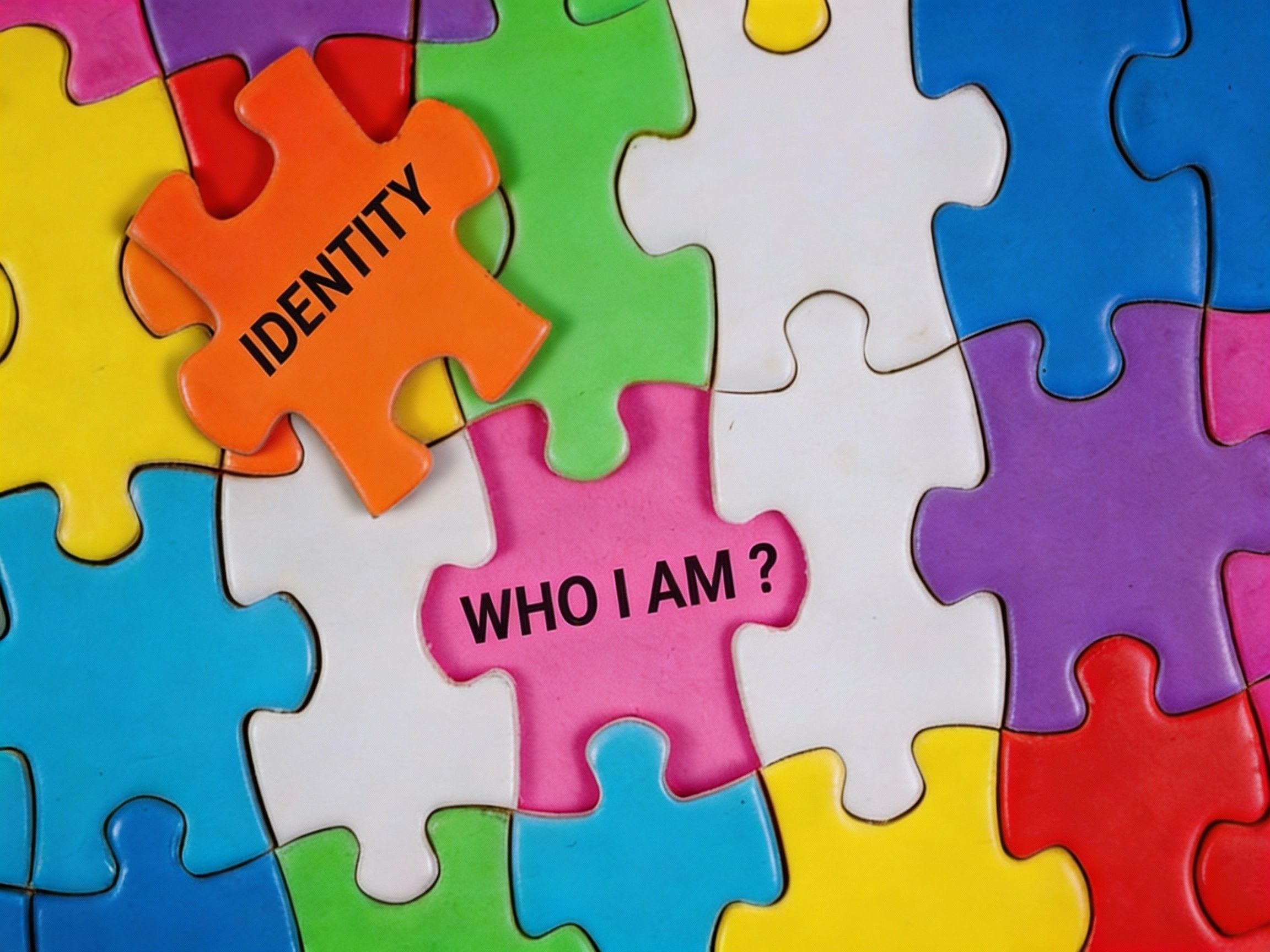
Okay, this one's going to feel a little touchy-feely, but stick with me because it's incredibly valuable.
Most of us have built our entire adult identity around our work. We introduce ourselves by what we do: "I'm a director at..." "I'm a manager of..." "I'm the person who handles..."
I did this at a party once and literally watched the other person's eyes glaze over mid-sentence. Fun times.
But here's the thing: take away the job title and what's left?
I want you to do something that might make you uncomfortable. Grab a piece of paper or open a note on your phone. Draw a circle in the middle and write "ME" in it. Now draw five to seven lines coming out from that circle like spokes on a wheel, and at the end of each line, write a different role or identity you hold.
Most people's first wheel looks pretty much the same. Manager. Colleague. Department expert. Project lead. Mentor to junior staff. All work, all the time.
Now look at that wheel and ask yourself: how many of those identities disappear the day you retire?
Yeah. That's the problem right there.
Now make a second wheel, and this time the identities have to exist outside of work. Mother. Aunt. Sister. Friend. Volunteer. Hobbyist. Learner. Community member. Mentor in non-work contexts.
How full is that second wheel? If you're staring at a lot of blank spokes, you're not alone. Most of us have let our non-work identities shrink to almost nothing because work consumed everything.
The good news? You've got time to fix this. Pick one identity from that sparse non-work wheel that you want to strengthen. Just one. Then this week, take one action to build it. Call the friend you haven't seen in six months and actually make plans. Sign up for that class you've been bookmarking. Show up to the volunteer orientation you've been thinking about.
Small steps. But they're steps in the direction of having an actual life when work isn't there to fill the void.
3. The Volunteer Test Drive: Try On Different Roles Before You Commit
Here's something nobody tells you about retirement: you're going to have a LOT of time. Like, an uncomfortable amount of time if you haven't thought through how you want to spend it.
And here's the thing about purpose and meaning - you can't just will it into existence. You have to discover what actually lights you up, and the only way to do that is through experimentation.
This is where volunteering becomes your secret weapon. Not because "retirees should volunteer" (although many do and love it), but because volunteering lets you test-drive different versions of your future self without making a permanent commitment.
I know a woman who thought she'd absolutely love mentoring young professionals when she retired. She'd spent her whole career helping junior staff, got great satisfaction from it, figured that would be her thing in retirement.
She signed up for a mentoring program. Hated it. Turns out, after four decades of giving advice, she was completely done. What she actually wanted was to learn new things, not teach them. So she switched to taking classes instead, and she's never been happier.
The point is, she would never have figured that out without trying it.
So sign up for short-term volunteer gigs. One-time events. Three-month commitments. Not lifetime board positions where you're stuck for years doing something that drains you. Try wildly different things and pay attention to how you feel.
Love animals? Try a shift at the animal shelter and see if it's actually joyful or just depressing. Want to be outdoors more? Join a trail maintenance crew or community garden and find out if you love it or just like the idea of it. Miss the problem-solving part of work? Volunteer for a nonprofit that needs strategic help and see if you still want that in your life or if you're completely done with that kind of thinking.
This week, research three volunteer opportunities that sound even slightly interesting. Just research. Look them up. Read about them. Then reach out to one and ask about their short-term or trial opportunities. You don't have to commit to anything. You're just gathering data about what Future You might actually enjoy versus what sounds good in theory.
4. The Social Network Audit: Build Friendships That Aren't Work-Dependent
Let's talk about something uncomfortable: when you retire, you're going to lose most of your work friends.
I know, I know. You're thinking, "Not MY work friends. We're different. We're close." And maybe you are. But proximity is powerful, and when you're not seeing someone five days a week, not sharing the same stresses and victories, not bonding over how ridiculous the new policy is, those relationships fade fast.
I've seen it happen over and over. People retire, fully expecting to stay in touch with their work crew, and six months later they're barely exchanging holiday cards.
This is especially brutal for women who've spent decades being "the only one" or "one of the few" in their field. Your work friends might be the only people who truly get what you've been through professionally. Losing that can feel devastating.
So here's what you need to do: audit your social network right now and start intentionally building friendships that exist outside of work.
Make a list of the people you actually spend time with. Not people you follow on social media. People you actually see and talk to. Put them in categories: work friends who you only see at work, friend-friends who you see outside of work contexts, and acquaintances who you like but haven't deepened the relationship with yet.
If your "friend-friends" list is shorter than three people, we have work to do.
Think about someone you genuinely like but haven't made time for because work has consumed your life. Maybe it's that neighbor you always chat with but never actually hang out with. Maybe it's someone from your gym or your book club or your kids' school who you clicked with but never followed up with.
This week, reach out to that person. Not with a vague "we should get together sometime" but with an actual invitation. "Are you free for coffee Saturday morning?" or "Want to try that new hiking trail next weekend?" Make it specific. Make it soon. Make it happen.
Then do it again next month. And the month after that. Building friendships takes time, which is exactly why you need to start now, not when you're already retired and feeling isolated and wondering why nobody calls you anymore.
5. The Purpose Prototype: Small Experiments to Test What Gives You Meaning
Here's the million-dollar question: what gives your life meaning when work isn't providing it?
For many of us, especially those who've fought hard to get where we are professionally, work has been everything. It's given us achievement, recognition, identity, purpose, mental stimulation, social connection, and structure. That's a lot to replace.
And here's what I know after watching thousands of people retire: you cannot figure this out theoretically. You have to actually try things.
I call this "purpose prototyping" and it's exactly what it sounds like. You're running small experiments to test what activities, commitments, and pursuits actually make you feel engaged and alive.
Think of yourself as a scientist. The hypothesis you're testing: "This activity will give me a sense of purpose and meaning." But unlike most experiments, you're not looking for one "right" answer. You're building a portfolio of activities that collectively fill the gap that work used to fill.
Here's what this might look like. Maybe you take a class in something completely new just to see if being a beginner again feels energizing or frustrating. Some people love learning new things in retirement. Others realize they're completely done being the newbie and they just want to do things they're already good at.
Or maybe you start a project that lets you make something. Writing, crafting, gardening, cooking, photography, whatever. See if creating things for the joy of it, not for a grade or a paycheck, feels meaningful or pointless to you.
Or join a group focused on deep conversation. A faith community, a philosophy discussion group, even a grief support circle. Test whether you're craving depth over breadth in your social connections right now.
Try different types of movement. Not just exercise, but dance or yoga or hiking or tai chi. See what makes you feel embodied and alive versus what feels like a chore you're forcing yourself to do.
Do something aimed at the next generation. Mentor someone, teach a skill, document family history, pass down something you know. See if legacy work fills you up or feels like another obligation you don't want.
This week, pick one experiment to run over the next thirty days. Just one. Give it a real try, not a half-hearted "I'll think about it" but an actual commitment. At the end of thirty days, ask yourself some hard questions. Did you look forward to this? Did time pass quickly or slowly? Did you feel energized or drained afterward? Could you see yourself doing this regularly? Did it scratch an itch you didn't know you had?
Write down your answers. This is data about Future You. Then pick another experiment and run it for thirty days. By the time you actually retire, you'll have a much clearer picture of what your life could look like, not based on what retirement "should" be, but based on actual evidence of what works for you.
The Part Where I Get Real With You
Look, I'm not going to lie and say that doing these five things guarantees you'll have a perfect transition into retirement. Life doesn't work that way. There will still be hard days. There will still be moments when you feel lost or unmoored or wonder what the hell you're doing with your life.
But here's what I can guarantee: if you do nothing and just hope it works out, you'll be part of that 89% who aren't prepared for the emotional reality of retirement. And that's a terrible place to be, especially when you had years to prepare and chose not to.
The retirement industry has failed you. They've reduced one of life's biggest transitions to a math problem about whether you can afford to stop working. But you don't have to accept that failure as your reality.
You can take control. You can start building the life you want right now, while you still have the energy, the time, and the opportunity to experiment.
.jpeg)
Five years from now, when you're looking at retirement, you'll either be terrified because you have no idea who you'll be without your job, or you'll be excited because you've been building your next chapter all along and you're ready to dive in fully.
Which version of Future You do you want to be?
Start this week. Pick one thing. Just one. Do it. Then next week, pick another thing. Keep going. Small steps, concrete actions, real progress toward making sure you don't wake up retired and completely lost.
You've got this. And if you need a reminder why this matters, go back and read that article about the 11% statistic. Then come back here and do the work.
Because Future You is counting on Current You to start building the bridge.