
You Have an Estate Whether You Know It or Not

Let me ask you something. Do you have a job? A bank account? A life insurance policy through your employer? A car? A few hundred dollars in savings? Some furniture you actually like? Then congratulations. You have an estate. You may not have a will. You may not have a trust. You may never have spoken to an estate planning attorney in your life. But you have an estate. And right now, without a plan, the state you live in has already decided what happens to it when you are gone.
This is not a conversation for wealthy people. This is not a conversation for people with lakefront property and stock portfolios. This is a conversation for everyone — because estate planning is not about how much you have. It is about who gets it, who decides, and whether your family has to fight about it.
In my family, with the exception of my mother, nobody had an estate plan. That is just not something we talked about. Death made people uncomfortable. Planning for it felt like inviting it. And so we did not plan. Most families I know are the same way. And most of them found out the hard way what that means.
Two Funerals. Two Completely Different Outcomes.
When my grandmother died, her life insurance policy was worth less than a thousand dollars. That was it. My mother paid for my grandmother's funeral, and it was a beautiful funeral — my grandmother deserved every bit of it. But I could not help my mother with the cost. I was still paying college tuition for my youngest son. My cousins could not help either — they were working minimum wage jobs, doing the best they could. So my mother carried it alone. And she did it with grace. But she should not have had to.
My mother gave me the gift of being able to just grieve. When my mother died, it was different. My mother had everything in order. She had her papers. She had life insurance. She had insurance on the house. She had a will. And I knew exactly where to find all of it. Because she had made sure I knew. I am an only child, so I did not have to divide anything with siblings or navigate anyone else's grief alongside competing claims to what she left. I could just grieve. I could just be her daughter. That is the gift she gave me. And it was one of the greatest gifts I have ever received.
I want that for your family too. Which means I need to talk to you about what happens when there is no plan in place — because it is not just uncomfortable. In some cases, it is dangerous.

What You Already Have (Whether You Planned It or Not)
Everything you own is your estate. Here is something most people do not realize. When you die, everything you own becomes your estate. Your bank account. Your car. Your personal belongings. Your life insurance policy from your employer — that is part of your estate. Your unpaid salary and vacation days — that is part of your estate. If you own property, even a small piece of land your grandfather left your family — that is part of your estate. If you have a retirement account, a pension, even a hundred dollars in a savings account — all of it becomes your estate the moment you are gone.
The question is not whether you have an estate. The question is whether you have told anyone what to do with it. And if you have not, the state has an answer ready. It is called intestate succession, and it is a one-size-fits-all formula that was not written with your specific family in mind. It does not know about the cousin who helped you when you were struggling. It does not know about the sibling you have not spoken to in ten years. It does not know what you actually wanted. It just follows the formula.
According to the 2025 Trust & Will Estate Planning Report — the largest estate planning study ever conducted, surveying 10,000 American adults — 55 percent of Americans have no estate planning documents whatsoever. No will. No trust. No power of attorney. Nothing. And only 24 percent of Americans currently have a will. That means three out of four people reading this are leaving their family to figure it out alone.
When There Are Siblings, the Stakes Get Higher
I was lucky to be an only child. You may not have that luxury. I said earlier that I am an only child. I want to sit with that for a moment, because I know that is not most people's reality. Most people have brothers. Sisters. Half-siblings. Cousins who were raised like siblings. Stepchildren. Blended families in every configuration you can imagine. And when there is no will, all of those relationships and all of those competing needs get thrown into a legal process that is not designed to honor any of them.
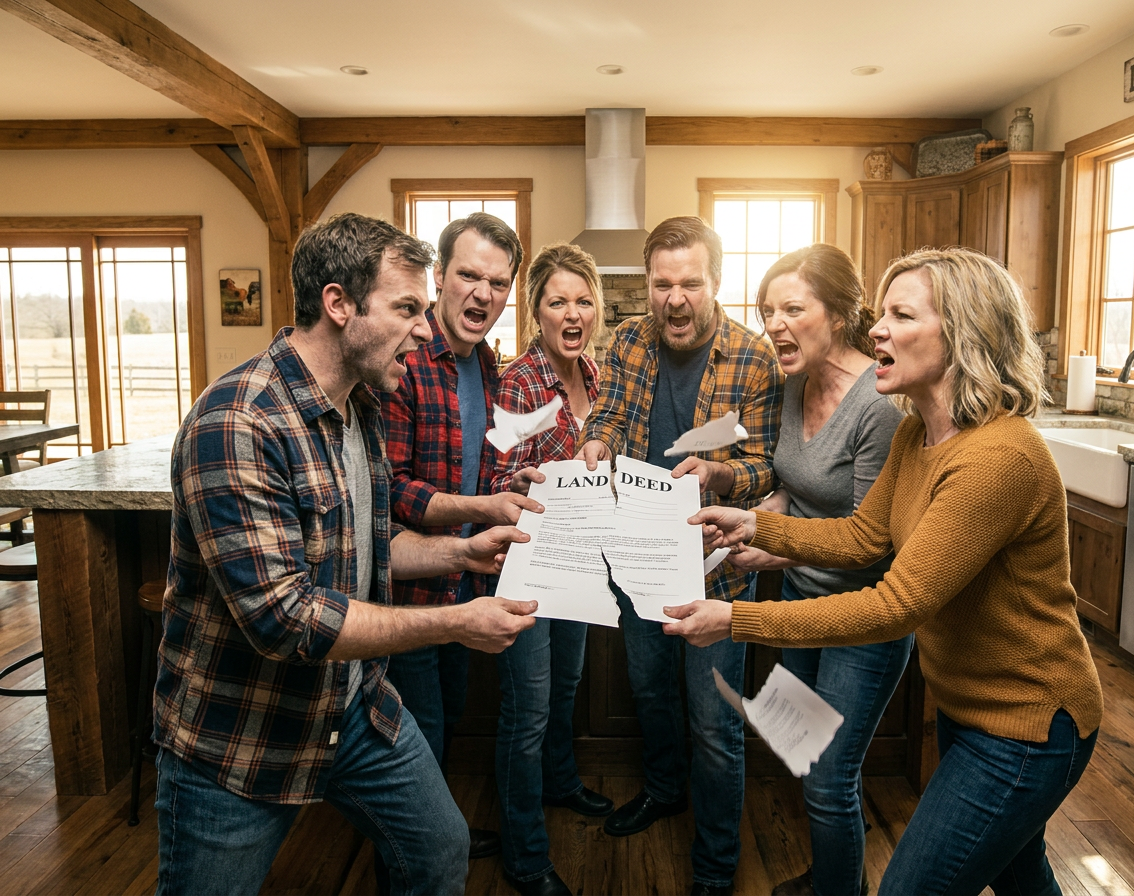
Family conflict over estates is not rare. Over a third of Americans — 35 percent — say they or someone they know has experienced family conflict because of a lack of estate planning. Thirty-one percent say the most damaging result of a poorly planned estate is leaving loved ones without enough money. These are not abstract statistics. These are the cousins who stopped speaking. The siblings who hired competing lawyers. The children of a blended family who lost what their parent always intended for them to have.
A will does not prevent grief. But it can prevent the grief from becoming a war. It limits the space for competing agendas because the decisions have already been made, in writing, by the person whose estate it is. That is the whole point.
The Land Grab You Never Saw Coming
I watched a documentary called Land Grab, and I have not been able to stop thinking about it since. The film looked at how certain buyers were able to acquire enormous amounts of land at extraordinarily cheap prices. The mechanism they used was elegant in its predation: they targeted families who had inherited property without going through a formal legal process. No will. No trust. Just a family understanding that the land belonged to all of them together. Then they found the weakest link.
Here is how it works, and it is completely legal. When someone dies without a will and leaves property to multiple heirs, each heir owns an undivided fractional share of that property. In legal terms it is called heirs’ property. What that means in practice is that any single heir — even one who owns a tiny percentage — can petition the court to force what is called a partition sale. The entire property gets sold. At auction. Often well below market value. And a developer who bought out one struggling heir for a small amount of cash can use that purchase to force the rest of the family off land they may have held for generations.
There is a documented case from Louisiana that illustrates exactly how this plays out. A family’s 160-acre property had been passed down informally for years. In 1999, a partition action was filed by the holder of a 4 percent share — a share that a great-uncle had sold to two buyers back in 1980 for just $100. That share eventually ended up with a timber company. The timber company owned only 4 percent of the land but used that stake to force the entire property to auction. The family had no cash to bid. The timber company bought the full 160 acres. Every home on the land was demolished. Source: Economic Policy Institute, Heirs' Property Report
The USDA calls it “the leading cause of Black involuntary land loss.” This is not a Southern problem or a rural problem. It happens in cities. It happens in every state. Estimates suggest it affects more than 3.5 million acres of Southern Black-owned land alone, worth more than $28 billion. And the mechanism that makes it possible every single time is the absence of a will.
A will would have changed everything in that Louisiana case. A clear legal transfer of ownership — a proper title — would have kept that timber company out entirely. The family’s land would still be standing. The homes would still be standing. And this is not about wealthy families with sprawling estates. This is about regular people who worked hard, built something, and trusted that their family would figure it out. The predators were counting on that trust.
So What Does an Estate Plan Actually Look Like?
This is simpler than you think. I am not going to scare you with a long legal checklist. But I want you to understand what the pieces are, because most people think ‘estate plan’ means a will and a will means a lawyer and a lawyer means money and money means this is not for them. Let me break that chain. You need:
A will. This is the document that says who gets what. Without it, the state decides. It also designates a guardian for minor children if something happens to you. This is non-negotiable if you have children.
Beneficiary designations. These are the forms on your retirement accounts, life insurance policies, and bank accounts that name who receives those assets directly — bypassing your will entirely. They must be kept current. An outdated designation can override everything your will says.
A durable power of attorney. This names someone to handle your finances if you become incapacitated and cannot make decisions yourself. Without this, a court may have to appoint someone — and that person may not be who you would have chosen.
A healthcare directive. Also called a living will. This documents your wishes for medical treatment if you cannot speak for yourself. It is the document that tells your family what you actually want — so they do not have to guess during the worst moment of their lives.
A healthcare proxy. This names a specific person to make medical decisions for you. Different from the directive — this is the person, not just the instructions.
You do not have to do all of this at once. Start with what matters most right now. If you have minor children, a will and guardian designation are the most urgent. If you have a retirement account, check your beneficiary designations this week. Right now. Before you finish reading this article. It takes ten minutes and it costs nothing.

The Conversation Your Family Needs You to Have
We keep meaning to get around to it. We do not like to talk about death. I understand that. In so many families — mine included — talking about the end feels like inviting it. So we keep our heads down, we keep working, and we tell ourselves we will get around to it. And then we do not.
My grandmother was a woman who gave everything she had to the people she loved. What she could not give them was a plan for after she was gone. My mother watched that, learned from it, and made a different choice. She put her papers in order. She made sure I knew where everything was. And when the time came, I was able to just be her daughter. Not her estate administrator. Not a party to a dispute. Just her daughter.
That is what I want for your family. And it starts with a simple acknowledgment: you have an estate whether you know it or not. The only question is whether you are the one who decides what happens to it. Or whether you leave that decision to someone else entirely.
Frequently Asked Questions
Q: Do I really have an estate if I don’t own property?
A: Yes. Your estate includes everything you own at the time of your death — your bank accounts, your retirement accounts, your life insurance, your car, your personal belongings, any money owed to you including unpaid wages or vacation pay. You do not need to own a home or have significant wealth to have an estate that needs a plan.
Q: What happens if I die without a will?
A: If you die without a will, you die intestate, and your state's intestate succession laws determine who inherits your assets. These laws follow a standard formula — typically prioritizing spouses, then children, then parents, then siblings — regardless of your actual wishes or your family's specific circumstances. It does not account for who you were close to, who helped you, or who you wanted to protect.
Q: What is heirs’ property and why is it dangerous?
A: Heirs’ property occurs when someone dies without a will and property passes informally to multiple family members without a clear legal title. Each heir owns an undivided share, and any one of them can petition a court to force a partition sale of the entire property — meaning the whole thing gets sold, often at auction and below market value. Predatory developers specifically target heirs’ property by purchasing a small share from one willing heir and then using that stake to force the rest of the family out. The USDA has recognized this as the leading cause of Black involuntary land loss, having contributed to land loss ranging from 4.7 million to 16 million acres over the last hundred years.
Q: Does a will cover my retirement accounts and life insurance?
A: No — and this surprises a lot of people. Retirement accounts, life insurance policies, annuities, and payable-on-death bank accounts pass directly to whoever is named as beneficiary on those accounts, regardless of what your will says. Beneficiary designations override your will. That is why keeping them updated is just as important as having the will itself.
Q: How much does it cost to create a basic estate plan?
A: It depends on complexity. Updating beneficiary designations on your financial accounts costs nothing — you do it directly with the account provider. Online tools like Trust & Will or LegalZoom offer basic wills starting around $100 to $200. Working with an estate planning attorney for a complete plan typically runs $500 to $1,500 for a straightforward situation. Compare that to what probate can cost — up to 10 percent of your estate's value, plus months or years of your family's time and energy.
Q: I have siblings. What do I need to think about?
A: When multiple heirs are involved, a clear will is essential. Without one, assets are divided by state law, which may not reflect your family's dynamics, your relationships, or what the deceased actually wanted. A will limits the space for competing claims and family conflict because the decisions are already documented. If you share property with siblings — especially inherited property without a clear title — talk to an estate planning attorney about securing a proper legal title to protect everyone's share.
Q: I’m not close to retirement yet. Do I still need an estate plan?
A: Absolutely. Estate planning is not an age issue — it is a 'you have people who depend on you' issue. If you have minor children, a will is urgent right now because it designates a guardian. If you have any financial accounts, checking your beneficiary designations takes ten minutes and costs nothing. The best time to do this is before you need it.