
Started Retirement Planning Late? How to Catch Up

A fresh perspective on building retirement wealth when the deck seems stacked against you
Picture this: You're at brunch with your girlfriends, and someone mentions they just checked their 401(k) balance. The table goes quiet. Everyone suddenly becomes very interested in their avocado toast. Sound familiar?
Here's what nobody's talking about: that uncomfortable silence isn't because we're bad with money. It's because we've been playing a retirement game with different rules than everyone else, and nobody bothered to tell us the playbook was rigged.
But here's the plot twist – once you understand the real game, you can absolutely win it. And I'm not talking about barely scraping by in retirement. I'm talking about that "winter in Barcelona, summer in Maine" kind of retirement. The "yes, I'll take the museum membership AND the wine club" retirement.
Let's have an honest conversation about what's really happening with women and retirement savings, and more importantly, how to flip the script entirely.
The Truth Nobody Wants to Say Out Loud
You've probably heard the statistic: women retire with about 30-40% less in savings than men. The National Institute on Retirement Security found that women over 65 are 80% more likely than men to live in poverty. But here's what those statistics don't capture: We're not failing at retirement. We're succeeding at life in ways that traditional retirement planning never accounted for.
Think about it. When your mom needed help after her surgery, who took three months off work? When the kids needed someone to shift to part-time during those crucial early years, who made that call? When your partner's job required a cross-country move, whose career took the hit?
We make these choices because we're wired to see the bigger picture – that relationships and family often matter more than an extra deposit in the 401(k). The problem isn't our choices. The problem is that the traditional retirement system wasn't designed for the way we actually live our lives.
When Life Happens to Your Retirement Plans
Let me tell you about Olivia, a marketing director who thought she had it all figured out. She started her career at 22, making $45,000 a year, and contributed to her 401(k) from day one. She was doing everything by the book. Then, as it does for most of us, life happened.
At 30, when her twins arrived, she made the same calculation millions of women make every year. Childcare for two infants would cost $3,200 monthly, more than her take-home pay. So she stepped away from her career for two years, telling herself it was temporary, just until the kids were old enough for preschool.
Eight years later, when her father was diagnosed with cancer, Olivia faced another impossible choice. Her siblings lived across the country, her mother was overwhelmed, and someone needed to manage the endless doctor appointments, chemotherapy sessions, and insurance battles. She dropped to part-time for three years, using her "extra" days to become her father's unofficial care manager.
Now, at 45, Olivia is back to full-time work, making $95,000 a year. On paper, she's successful. But when she ran her retirement numbers with a financial planner, the reality hit hard. According to the National Women's Law Center, those five years of reduced income cost her $250,000 in lost wages, $50,000 in missed employer 401(k) matches, and nearly $400,000 in compound growth by retirement age.
That's not a sob story. That's math. And once you understand the math, you can start working with it instead of against it.
The Secret Nobody Explains Properly: Compound Interest
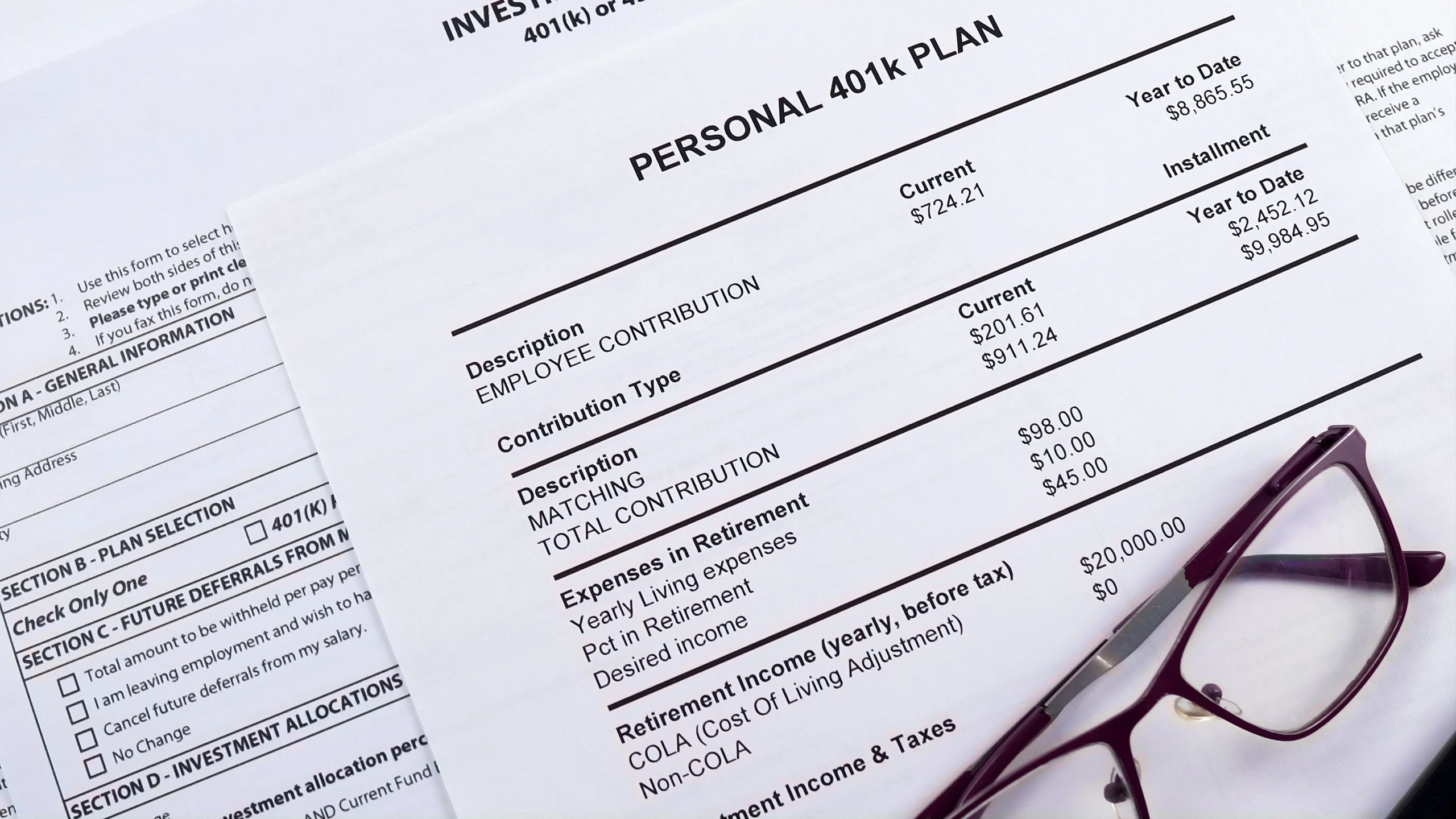
Here's something my first financial advisor never explained clearly, and it took me years to truly understand. Compound interest isn't just about your money growing. It's about time, and time is the one thing we lose when we step away from our careers.
Think of it like planting a tree. When you plant a tree at 25 and water it consistently, by the time you're 65, you have a mighty oak. But if you plant that same tree at 35, or if you stop watering it for five years in the middle, you don't just have a smaller tree – you have a fundamentally different outcome.
When you contribute $5,000 to your 401(k) at age 30, you're not just putting away $5,000. According to various retirement calculators (including the comprehensive one at redefineretirement.org), assuming 7% annual returns, that single contribution becomes $53,000 by age 65. Miss that contribution because you're home with a sick parent? You haven't just lost $5,000 – you've lost $53,000 of future wealth.
Now multiply that by five years of career breaks, and suddenly you understand why women retire with hundreds of thousands less than men. It's not because we're bad investors or frivolous spenders. It's because the system counts every year equally, but our lives don't unfold that way.
Check Your Account Balance - NOW
Before I tell you how women are successfully closing the retirement gap, I need to share Emma's story because it illustrates a mistake that's shockingly common and completely preventable.
Emma works in healthcare administration at the same hospital where she started 30 years ago. She's that colleague everyone loves – the one who remembers birthdays, organizes the holiday party, and has been faithfully contributing to her 401(k) since day one. Last month, when she finally sat down with a retirement counselor, she expected good news. After all, she'd been saving 10% of her salary for three decades.
The counselor pulled up her account: $500,000. Emma's face fell. "That's it?" she asked. "I've been saving for 30 years."
When they dug into her account history, the problem became crystal clear. For 30 years, Emma's contributions had been sitting in the plan's default option – a money market fund earning roughly 2% annually. She'd assumed that when she selected "10% contribution" on her paperwork, someone, somewhere, was actually investing that money. "I thought HR handled the investing part," she told me later, tears in her eyes. "I didn't know I had to choose where it went."
Here's the devastating math: Had Emma's money been in a simple target-date fund averaging 7% returns, she would have $1.2 million today. That's a $700,000 mistake, and according to Vanguard's How America Saves report, 40% of 401(k) participants are making similar errors right now.
The truth is, nobody teaches us this stuff. Your employer provides the 401(k) plan, but they're not allowed to give investment advice. Financial advisors cost money most of us don't have when we're starting out. So we check the box, assume we're doing the right thing, and lose hundreds of thousands of dollars to a simple misunderstanding.
If you have a 401(k) and you're not sure what it's invested in, stop reading this article right now and check. I'm serious. Log into your account and look for terms like "money market," "stable value," or "capital preservation." If that's where your money is sitting, you need to make a change immediately.
For most people, the simplest solution is a target-date fund. These funds automatically adjust from aggressive to conservative as you approach retirement. You simply pick the fund closest to when you plan to retire. If you're 45 and want to retire at 65, that's 20 years from now, so you'd choose the 2045 fund. It's not perfect, but it's infinitely better than letting your money sit in cash.
If you want to be slightly more hands-on, consider a simple three-fund portfolio that Morningstar research shows can outperform complex strategies. You want roughly 60% in a U.S. total market index fund, 30% in an international index fund, and 10% in a bond index fund if you're in your 40s. As you get older, gradually shift more toward bonds.
The key is this: fees matter enormously over time. Look for index funds with expense ratios under 0.20%. That tiny number might seem insignificant, but over 30 years, the difference between a 0.05% fee and a 1.5% fee could cost you hundreds of thousands of dollars.
Retirement Planning is an Individual Thing. . . Stop Comparing
Now, back to Olivia, our marketing director who thought she was hopelessly behind. When she came to me at 47, she'd done the math and concluded she'd need to work until 75 to have enough to retire. I asked her to give me three years to prove her wrong.
The first thing Olivia did was radical: she stopped comparing herself to her male colleagues. "My coworker Tom has $800,000 saved," she told me. "But Tom's also been divorced twice, his kids won't speak to him, and he missed his mother's final years because he wouldn't take time off for her care. Is that really winning?"
Instead of lamenting what she'd lost, Olivia created what I call a Reality-Based Retirement Plan. She used multiple tools including the calculator at redefineretirement.org to model different scenarios specifically for women's retirement planning, and the Social Security Administration's calculator to see her actual projected benefits. She discovered something surprising. Those years caring for the twins? She'd maintained her health insurance and even earned some Social Security credits from freelance work she'd done during nap times. The years with her dad? She'd contributed to a Spousal IRA that her husband had set up but forgotten to tell her about.
In year two, Olivia got serious about what researchers at the Stanford Center on Longevity call catch-up strategies. But instead of just trying to save more from her existing salary, she completely reimagined her earning potential.
She started by switching companies, something women are often reluctant to do. That move alone increased her salary from $95,000 to $110,000. But here's the brilliant part – she maintained her previous lifestyle and saved every penny of that raise. Then she negotiated a signing bonus and dumped it straight into her 401(k). Within six months, she was maxing out her regular 401(k) contributions at $23,000 plus the $7,500 catch-up contribution available to people over 50.
But Olivia wasn't done. She realized that traditional retirement planning assumes one income stream, but women are natural multipliers. We've been juggling multiple responsibilities forever, so why not multiple income streams? She kept her day job but started consulting in her field on weekends, earning an extra $30,000 annually that went straight to retirement. She rented her basement on Airbnb, adding another $12,000 yearly. She even started teaching online marketing courses, bringing in $8,000 more.
By year three, Olivia was saving $80,000 annually toward retirement – more than she'd ever earned in her 20s and 30s. At this rate, she'll retire at 62 with more than she'd originally planned for, even accounting for those lost years.
Own a Business? Then This is For You

If you're self-employed or own a business, I need you to pay special attention to this next part, because Luna's story might save your retirement.
Luna started her graphic design business at 28, thrilled to escape corporate life. For five years, she thought she was being smart by keeping her business income low to "save on taxes." She'd pay herself just enough to cover expenses, leaving the rest in the business account. What she didn't realize was that she was also keeping her Social Security credits dangerously low.
Here's what nobody explains to business owners: you're responsible for both the employee and employer portions of Social Security tax. That's 15.3% of your income right off the top. It feels painful to write that check every quarter, so many business owners try to minimize it. But according to the IRS self-employment guidelines, that strategy can cost you hundreds of dollars monthly in retirement benefits.
When Luna finally met with a financial advisor at 33, she learned she was on track to receive just $800 monthly from Social Security at retirement, compared to the $1,800 she could have earned with proper planning. Over a 25-year retirement, that's a $300,000 mistake.
The solution was surprisingly simple. Luna started paying herself a proper salary of $60,000 annually, ensuring she earned full Social Security credits. Yes, she paid more in taxes, but she also discovered something amazing: as a business owner, she had access to retirement savings options most employees could only dream of.
She opened a Solo 401(k), which let her contribute up to $23,000 as an employee, plus up to 25% of her compensation as an employer. In total, she could shelter $69,000 annually from taxes while building serious retirement wealth. Compare that to a regular employee who can only contribute $23,000 to their 401(k), and suddenly being a business owner looks like a retirement superpower.
Harper, who runs a consulting firm, takes this even further. At 52, she's putting away $65,000 annually in her Solo 401(k), plus another $8,300 in a Health Savings Account that she's treating as a retirement account. She plans to retire at 60 with more saved than her corporate executive friends.
For high-earning business owners over 50, there's an even more powerful option: the defined benefit plan. Sophia, a 55-year-old attorney, is contributing $150,000 annually to her defined benefit plan. It's complex and requires an actuary to manage, but for someone making $400,000+ annually, it's a game-changer. She'll retire at 62 with a guaranteed income stream for life.
The key for business owners is to think beyond this year's tax bill. Every quarter when you make those estimated tax payments, remember that you're not just paying taxes – you're buying your future security. Pay yourself properly, make those Social Security contributions, and take advantage of the incredible retirement savings opportunities available to you.
The Health Insurance Gap That Terrifies Everyone

Let's address the elephant in the room: health insurance between early retirement and Medicare. It's the number one reason people keep working jobs they hate, and it's especially challenging for women who often have more health concerns and live longer.
COBRA seems like the obvious solution, but at $1,500 to $2,500 monthly for a single person, it can devour your retirement savings faster than you can say "pre-existing condition." But there are alternatives that nobody talks about.
Ava's story shows how creative thinking about health insurance can make early retirement possible. She retired at 60 with $1 million saved, which sounds like plenty until you realize that COBRA only lasts 18 months and costs about $1,800 monthly. After that, she'd still need coverage for another three and a half years until Medicare kicks in at 65. The total cost of COBRA plus private insurance could easily exceed $150,000 over those five years. Instead, she got strategic about the Affordable Care Act marketplace from day one, skipping COBRA entirely.
By carefully managing her income through a combination of Roth withdrawals (which don't count as income), taxable investment accounts (where she only pays tax on gains, not the principal), and selective traditional 401(k) withdrawals, Ava keeps her Modified Adjusted Gross Income at exactly $35,000. At that income level, her ACA plan costs $89 monthly instead of $800. She's saving over $8,500 annually on health insurance, money that stays invested for her future.
Mia took a different approach. She joined a health sharing ministry, which isn't insurance but can bridge the gap for healthy individuals. She pays $300 monthly with a $1,000 annual "unshared amount" (similar to a deductible). Over three years between ages 62 and 65, she saved $40,000 compared to COBRA. These ministries aren't for everyone – they often have religious requirements and don't cover pre-existing conditions – but for some, they're a viable bridge.
My favorite strategy, though, is what Ella calls her "bridge job." She works 20 hours weekly at Starbucks, earning about $18,000 annually. But the real value isn't the paycheck – it's the full health insurance benefits worth $15,000 annually. She actually enjoys the social aspect, stays active, and has solved her health insurance dilemma while earning extra money. Companies like Costco, UPS, and REI offer similar part-time benefits programs.
For those willing to think bigger, geographic arbitrage opens up incredible possibilities. Several states that expanded Medicaid offer coverage if your income is under 138% of the poverty level – that's about $20,000 for a single person. Some states have their own exchanges with better subsidies than the federal marketplace.
The International Retirement Revolution
Speaking of geographic arbitrage, let me tell you about Isabella and the Portugal D7 Visa, which might be the best-kept secret in retirement planning.
Isabella retired at 58 with $400,000 saved. Her financial advisor told her it might last 10-12 years in Portland, Oregon. She'd need to work at least five more years to be secure. Instead, she moved to Porto, Portugal, where she lives beautifully on $2,000 monthly, has excellent healthcare, and her money will easily last 20+ years.
The D7 Visa requires just €760 monthly (about $820) in passive income, which can come from Social Security, pensions, investments, or rental income. It includes a path to permanent residency and even citizenship, covers your spouse and dependent children, and has no age restrictions. The healthcare in Portugal is excellent and affordable – Isabella pays $150 monthly for comprehensive private insurance that would cost $800 in the States.
Portugal isn't the only option. Panama's Pensionado Visa requires just $1,000 monthly income and offers discounts on everything from restaurants to healthcare, plus no tax on foreign income. Costa Rica's Rentista Program requires $2,500 monthly income for two years or a $60,000 deposit, but gives you access to their universal healthcare system. Malaysia's MM2H program offers excellent healthcare at a fraction of U.S. costs in a country where English is widely spoken.
Mexico, being closest to home, is increasingly popular. Their temporary resident visa requires about $2,100 monthly income or $42,000 in savings. You can drive back to the U.S. easily, and healthcare is so affordable that many expats pay out of pocket rather than dealing with insurance. The U.S. State Department provides helpful resources for Americans considering retirement abroad.
Greece recently introduced a Financially Independent Person Visa requiring €2,000 monthly passive income. It gives you EU residency benefits, access to European healthcare, and the ability to live in a beautiful, affordable Mediterranean country.
The key with international retirement is to visit first, rent before buying, and connect with expat communities who can share real experiences. What sounds romantic in theory might not work in practice, but for those who find their spot, it can make retirement possible years earlier than staying in the U.S.
The Reality

Not everyone makes six figures, and honestly, most retirement advice completely ignores people making under $40,000. But there are strategies that work, even when you're living paycheck to paycheck.
Amelia works as a medical assistant making $35,000. Traditional advice would tell her to save 10-15% for retirement, which would be $300-400 monthly. That's impossible when rent takes half your income. So Amelia started with just 1% – that's $29 monthly, less than most people spend on streaming services. Every six months, when she gets her small raise, she increases her contribution by 1%. Five years later, she's saving 10% and barely noticed the gradual change.
But here's where it gets interesting. Amelia discovered the IRS Retirement Savings Contribution Credit, also known as the Saver's Credit, which is free money most lower-income workers never claim. Since she makes under $36,500 as a single person, she gets a 50% credit on contributions up to $2,000. When she contributes $2,000 to her IRA, she gets $1,000 back on her taxes. Her real cost for $2,000 in retirement savings is just $1,000.
Charlotte, who makes $32,000 as a teacher's aide, took a different approach. Instead of trying to squeeze savings from her regular paycheck, she created a dedicated retirement income stream. She walks dogs on weekends and three evenings a week, earning about $400 weekly. That's $20,000 annually that goes straight to retirement – more than she could ever save from her main job.
The Roth IRA is particularly powerful for lower-income workers. When you're in the 12% tax bracket, paying taxes now and getting tax-free growth forever is a fantastic deal. Zoe, making $28,000 annually, contributes $200 monthly to her Roth IRA. She'll pay minimal taxes now, but in retirement, every penny she withdraws will be tax-free.
Public service jobs often have hidden benefits that make up for lower pay. Nora works as a school secretary making $38,000, but she'll retire with a state pension paying $1,500 monthly, a 403(b) with $150,000, Social Security of $1,200 monthly, and retiree health insurance. Her total retirement income will actually exceed her working salary.
Technology is also making saving easier for everyone. Apps like Acorns round up your purchases and invest the spare change. Stash lets you start investing with just $5. Hazel started with Acorns three years ago and has saved $3,400 without really thinking about it – money she never would have saved otherwise.
Family resource pooling is another powerful strategy. Three sisters – Scarlett, Violet, and Rose – bought a triplex together. Each pays $500 monthly instead of $1,500 for separate rentals. They save $1,000 monthly each, money that goes straight to retirement. They share childcare, buy groceries in bulk, and support each other through job losses and health challenges. It's not the American dream of individual success, but it's creating real financial security.
Slow and Steady Wins the Race
After working with hundreds of women on retirement planning, I've noticed something profound. The biggest barrier isn't math or money – it's mindset. We've internalized messages that we're "bad with money" or "it's too late" or "I'll never have enough."
The Harvard Business Review's research on women and confidence shows we typically underestimate our abilities by 30%. When it comes to retirement planning, that translates to thinking we need twice as much as we actually do, or believing it's too late when it absolutely isn't.
Here's what I want you to understand: You're not behind. You're adapting to a system that wasn't designed for you, and that takes incredible strength and creativity. Every woman I've mentioned in this article – Olivia, Emma, Luna, Ava, Isabella, Amelia, and all the others – started exactly where you are right now: worried, uncertain, feeling behind.
The difference between women who retire comfortably and those who struggle isn't starting early or earning more or picking the perfect investments. It's taking action despite the fear, starting despite the uncertainty, and continuing despite the setbacks.
You don't need a perfect plan. You don't need to understand every investment option. You don't need to save 20% of your income starting tomorrow. You just need to do one thing today that your future self will thank you for. Check your 401(k) allocation. Open that IRA. Have that difficult conversation with your partner. Calculate your Social Security benefits. Pick one thing and do it today.
Your Personal Action Plan Starts Now
If you're 35 to 45, this is your acceleration decade. Start by creating an account at ssa.gov to check your Social Security statement and make sure all your earnings are recorded correctly. List every retirement account you've ever had, including that 401(k) from your first job that you forgot about. Calculate your real net worth, not to judge yourself but to know your starting point.
Next month, increase your 401(k) contribution by just 1%. If you don't have a 401(k), open a Roth IRA and set up a $100 monthly automatic transfer. If you're self-employed, research Solo 401(k) options. The goal isn't perfection; it's progress.
By month three, identify one skill you could monetize. Maybe it's your organization skills, your writing ability, or your knowledge of social media. Set a goal to earn $500 monthly extra within six months, with every penny going to retirement.
If you're 45 to 55, you're in what I call the power decade. Your earnings are likely higher than ever, and you can take advantage of catch-up contributions. Max out your 401(k) if possible – that's $23,000 for 2024, plus $7,500 in catch-up contributions. Open and max out a Health Savings Account, treating it as a retirement account you won't touch until after 65.
This is also the decade to get serious about your investment allocation. If your money is sitting in conservative investments earning 3%, you're actually losing money to inflation. A reasonable allocation might be 65% stocks and 35% bonds, gradually shifting more conservative as you approach retirement. Don't try to pick individual stocks – stick with low-cost index funds.
If you're 55 to 65, these are your sprint years. Calculate exactly when you can retire using comprehensive planning tools. The retirement calculator at redefineretirement.org is designed specifically with women's unique challenges in mind, accounting for career breaks, longer life expectancy, and healthcare costs. Be realistic but optimistic. Consider working an extra year or two if it means claiming Social Security at 70 instead of 62 – that extra 24-32% in monthly benefits for life can make an enormous difference.
Research your health insurance bridge strategy now, not when you're ready to retire. Whether it's the ACA marketplace, a part-time job with benefits, or moving somewhere with affordable healthcare, have your plan in place. If you're considering international retirement, start visiting potential countries now. Join online expat communities and learn from people actually living the life you're considering.
Everything Is Possible
.jpeg)
Let me leave you with a few final stories that prove it's never too late to transform your retirement outlook.
Willow was a single mom who didn't start saving until she was 49, with just $12,000 to her name. She felt hopeless, especially reading articles about people who started saving in their 20s. But Willow had something those 20-somethings didn't: urgency and wisdom. She knew exactly what was important (security for her retirement) and what wasn't (keeping up with the Joneses).
She took on a second job, moved to a smaller apartment, and started saving 40% of her income. She invested aggressively in index funds, understanding that at her age, playing it safe was actually the riskiest strategy. Today, at 58, she has $380,000 saved and will retire at 65 with full Social Security benefits. "I may have started late," she says, "but I'm finishing strong."
Aurora left her marriage at 52 with $75,000 in retirement savings and crippling fear about her future. Her ex-husband had handled all the finances, and she'd never even logged into a 401(k) account. But divorce, as painful as it was, became her financial awakening. She moved to a smaller, less expensive city where her dollars went further. She started a consulting business in her field of expertise. She invested in index funds with 80% stocks despite conventional wisdom saying she should be more conservative at her age.
Four years later, Aurora has $200,000 saved and owns her condo outright. She's planning to retire to Costa Rica at 62, where she's already spent three exploratory visits and found a community of like-minded expat women. "Divorce didn't ruin my retirement," she says. "It gave me the push to finally take control of it."
Nova's story might be the most inspiring. She didn't save a penny for retirement until age 55, having spent decades raising children with special needs. When her youngest finally became more independent, Nova looked at her future and saw nothing but work until death. Instead of accepting that fate, she declared war on her timeline.
She took two jobs, one with health benefits and one for pure income. She lived on $30,000 annually and saved everything else. She learned about investing by watching YouTube videos and reading everything she could find. She opened a Roth IRA, a traditional IRA, and maxed out her 401(k) with catch-up contributions. In six years, she's saved $150,000. Combined with Social Security and a small pension from her years as a teacher's aide, she'll retire at 67 with dignity and security.
The Truth About Your Future
Here's what I know to be true after years of helping women navigate retirement planning: The woman who takes action today, even the smallest action, will be infinitely better off than the woman who waits for the perfect time to start.
You don't need to have it all figured out. You don't need a perfect plan. You don't need to understand every nuance of tax-advantaged accounts or investment strategies. You just need to start where you are, with what you have, knowing what you now know.
The retirement game might have different rules for women, but once you know those rules, you can absolutely win. Not just survive in retirement, but truly thrive. That vision you have of your future self – confident, secure, free to live on her own terms – she's not a fantasy. She's waiting for you to make her possible.
Your retirement story isn't written yet. You're not behind; you're just getting started. And the best chapter? It begins with whatever small step you take today.
Remember: Every dollar you save today is a gift to your future self. She's counting on you, and you won't let her down. You've handled harder things than this. You've navigated life's challenges with grace and strength. Retirement planning? You've got this.
The time to start isn't tomorrow, next month, or next year. The time is now. Your future self is cheering you on, and she can't wait to thank you for the decisions you make today.