How AI Is Changing Retirement Planning for Women
A conversation with my CTO sparked a question that keeps me up at night: How are we going to modernize our economy in the wake of AI? As someone who has spent over two decades in pension administration while building a gamified retirement planning platform, I see this question as fundamental to how we think about retirement itself. The answer may reshape everything we thought we knew about work, meaning, and the golden years.
The Revolution Most People Don't See Coming
We're living through the Fourth Industrial Revolution, yet most people planning for retirement are using playbooks from the Second. This disconnect isn't just problematic—it's potentially catastrophic for anyone expecting traditional retirement to exist in 20, 10, or even 5 years.
Each industrial revolution has fundamentally transformed not just how we work, but why we work, when we stop working, and what stopping work even means. Understanding this pattern is crucial for anyone trying to navigate retirement planning in an era where AI is displacing workers faster than any previous technological shift.
The conversation that sparked this article wasn't about code or game mechanics. It was about something deeper: the human need for purpose, the economic structures we've built around work, and how both are being disrupted by artificial intelligence. As we watch AI eliminate jobs through workforce reductions, layoffs, and role eliminations, we're forced to confront uncomfortable questions about human value, economic participation, and what retirement means when the very nature of work is transforming.
The First Industrial Revolution: When Retirement Didn't Exist (1760-1840)
The First Industrial Revolution moved us from agricultural societies to mechanized production. Steam power, textile manufacturing, and iron production created the factory system. But here's what most retirement planners don't discuss: retirement literally didn't exist.
Workers labored until they physically couldn't anymore. Family structures provided the only safety net—adult children supported aging parents, creating multigenerational households out of necessity, not choice. The lucky few with accumulated wealth might ease their workload, but the concept of a funded retirement period was as foreign as smartphones.
This revolution created a critical precedent: technology displaced agricultural workers but created factory jobs. The disruption was massive—entire communities uprooted, traditional skills became obsolete overnight—but new forms of work emerged. Sound familiar?
For retirement planning, this era established the baseline: work until death or incapacity. It's a sobering reminder that our modern concept of retirement is actually a historical anomaly, not a given right.
The Second Industrial Revolution: The Birth of Modern Retirement (1870-1914)
The Second Industrial Revolution brought electricity, assembly lines, and mass production. It also brought something revolutionary: the idea that workers could actually stop working before death.
Germany's Otto von Bismarck introduced the first state pension system in 1889, setting retirement age at 70 when life expectancy was 45. This wasn't generosity—it was political calculation and social engineering. Industrial accidents were common, older workers were less productive on assembly lines, and social unrest was growing. Pensions became a pressure release valve for industrial capitalism.
In America, the Great Depression catalyzed Social Security in 1935, establishing 65 as the retirement age. Private pensions emerged as companies competed for skilled workers during World War II, when wage controls prevented direct salary competition.
This revolution created the three-legged stool of retirement planning: Social Security, employer pensions, and personal savings. It established the narrative we still cling to: work for 40 years, retire at 65, enjoy your golden years. But this model assumed stable employment, predictable career paths, and defined benefit pensions—all things the next revolutions would systematically dismantle.
The Third Industrial Revolution: The Erosion of Certainty (1969-2000)
The Digital Revolution brought computers, the internet, and automation. It also brought the slow death of traditional retirement security.
Defined benefit pensions gave way to 401(k)s, shifting investment risk from employers to employees. The covenant between worker and company—lifetime employment for loyalty—shattered. Job hopping became normal, even necessary for advancement. Entire industries vanished while others emerged overnight.
Women entered the workforce en masse, doubling household incomes but also doubling the complexity of retirement planning. Career gaps for caregiving, wage disparities, and longer life expectancies created unique challenges that traditional retirement models never anticipated.
This revolution introduced a cruel irony: just as retirement planning became more complex and critical, the tools and structures supporting it became less reliable. The three-legged stool became wobbly—Social Security faced funding challenges, pensions disappeared, and personal savings rates plummeted as wages stagnated relative to costs.
Yet we still operated under Second Industrial Revolution assumptions: linear career progression, retirement at 65, a clear demarcation between working years and retirement. These assumptions were already breaking down, but AI would shatter them completely.
The Fourth Industrial Revolution: AI and the End of Retirement as We Know It
We're now in the Fourth Industrial Revolution, characterized by artificial intelligence, machine learning, robotics, and biotechnology. Unlike previous revolutions that displaced physical labor or routine cognitive tasks, AI threatens to automate creativity, analysis, and decision-making—the very skills we told displaced workers to develop.
The speed is unprecedented. Previous revolutions unfolded over decades, allowing generational adaptation. AI is transforming industries in months. A graphic designer with 20 years of experience watches AI create in seconds what took her hours. A financial analyst sees AI process in minutes what took his team weeks. A writer—yes, even writers—confronts AI that can produce coherent, engaging content at superhuman speed.
But here's where the retirement planning implications become profound: AI isn't just changing what jobs exist—it's changing what work means.
The Displacement Dilemma
When AI eliminates a job, it's not like previous technological displacement. A factory worker displaced by automation could retrain for service work. An accountant replaced by software could become a financial advisor. But when AI can do analysis, creativity, and decision-making, where do humans go?
The traditional answer—"learn new skills"—becomes problematic when AI learns faster than humans ever could. The half-life of skills is shrinking. By the time you've retrained, AI might have mastered that domain too.
This creates a retirement planning nightmare. How do you save for retirement when your income is unpredictable? How do you project 30-year expenses when you don't know if your industry will exist in 5? How do you define retirement when the boundary between work and non-work dissolves?
The Meaning Crisis
Humans derive meaning from work. It's not just about money—it's about purpose, identity, social connection, and contribution. When someone asks, "What do you do?" they're really asking, "Who are you?"
AI-driven displacement isn't just an economic crisis; it's an existential one. If machines can do everything better, faster, and cheaper, what's the point of human effort? This question becomes especially acute for those nearing traditional retirement age. Do you retrain at 55 for a job that might not exist at 60? Do you retire early into purposelessness? Do you cling to an obsolete role until forced out?
The traditional retirement model assumed you'd work until 65, then find meaning in leisure. But what if work disappears at 50? Or 40? What if it never really starts for younger generations? The psychological infrastructure of retirement—the earned rest after decades of contribution—collapses when contribution itself becomes obsolete.
Modernizing Our Economy: Three Pillars for the AI Age
.jpg)
So how do we modernize our economy in the wake of AI? The answer requires reimagining three fundamental pillars: economic participation, social contracts, and human purpose.
Pillar 1: Beyond Employment-Based Economic Participation
The link between work and income must be reconsidered. Not broken entirely—human effort should still be rewarded—but expanded beyond traditional employment.
Universal Basic Income (UBI) becomes less radical and more necessary as AI-driven productivity gains concentrate wealth. But UBI alone isn't enough. Humans need purpose, not just payments. We need systems that reward creativity, community contribution, and human connection—things AI cannot authentically provide.
Ownership Economics must expand. If AI and robots generate most value, humans need ownership stakes in these systems. This might mean universal equity grants in AI companies, citizen dividends from automation taxes, or new forms of collective ownership. The retirement planning implication: your "pension" might be your share of society's automated productivity.
Contribution Credits could recognize non-traditional value creation. Raising children, caring for elderly parents, creating art, building community, preserving culture—these human activities gain importance as traditional work disappears. Imagine retirement benefits accruing not just from paid employment but from verified community contribution.
Pillar 2: Flexible Life Architectures Instead of Linear Careers
The three-phase life—education, career, retirement—is obsolete. AI demands flexible, adaptive life architectures.
Continuous Learning Accounts could replace traditional retirement accounts. Instead of saving for complete work cessation at 65, you save for periodic reinvention throughout life. Take a year at 35 to retrain. Another at 45 to explore. Another at 55 to pivot. "Retirement" becomes distributed across life rather than concentrated at the end.
Phased Transitions replace cliff retirements. As AI handles routine aspects of jobs, humans focus on judgment, relationships, and creativity. A lawyer might transition from document review (AI-dominated) to client counseling (human-centered). An accountant might move from calculation (automated) to strategic advice (relationship-based). These transitions could span decades, blurring work-retirement boundaries.
Purpose Portfolios acknowledge that meaning comes from diverse sources. Instead of deriving identity from a single career, people cultivate multiple purpose streams: part-time consulting, creative pursuits, community service, family engagement. Retirement planning becomes life planning, optimizing for meaning across multiple dimensions.
Pillar 3: Redefining Value in a Post-Scarcity World
AI promises abundance—near-zero marginal cost for many goods and services. This post-scarcity potential requires new value frameworks.
Experience Economics elevates uniquely human exchanges. As AI handles production, humans create experiences. A master craftsperson's handmade furniture becomes valuable not for function (AI can make it cheaper) but for story, connection, and humanity. Retirement could mean transitioning from production to experience creation.
Relationship Capital becomes currency. In an AI-saturated world, genuine human connection becomes scarce and valuable. The retired executive's real asset isn't knowledge (AI has more) but relationships, judgment, and wisdom. These appreciate with age rather than depreciate.
Creative Expression shifts from luxury to necessity. As AI handles survival needs, human creativity becomes our distinguishing feature. Retirement might not mean stopping work but transitioning to pure creative expression—art, music, writing, design—freed from commercial constraints.
The Transition Generation: Navigating Between Worlds
Those We're the transition generation, with one foot in the old economy and one in the new. We can't rely on traditional replanning retirement today face unique challenges. tirement models, but new ones haven't fully emerged.
This requires hybrid strategies:
Defensive Planning: Maximize traditional retirement vehicles while they exist. Contribute to 401(k)s, IRAs, and Social Security. These may transform but likely won't disappear entirely. Consider them your foundation, not your entire house.
Adaptive Capabilities: Invest in skills that complement rather than compete with AI. Emotional intelligence, creative problem-solving, relationship building, and wisdom cultivation become your hedge against automation.
Multiple Scenarios: Plan for various futures. What if you're displaced at 55? What if traditional retirement vanishes? What if UBI emerges? What if you work until 80 in reimagined roles? Each scenario requires different financial and psychological preparation.
Community Building: In an atomized, AI-driven world, community becomes crucial. Build networks now that can provide economic, social, and psychological support later. Your retirement security might depend more on relationships than account balances.
From Retirement to Renaissance
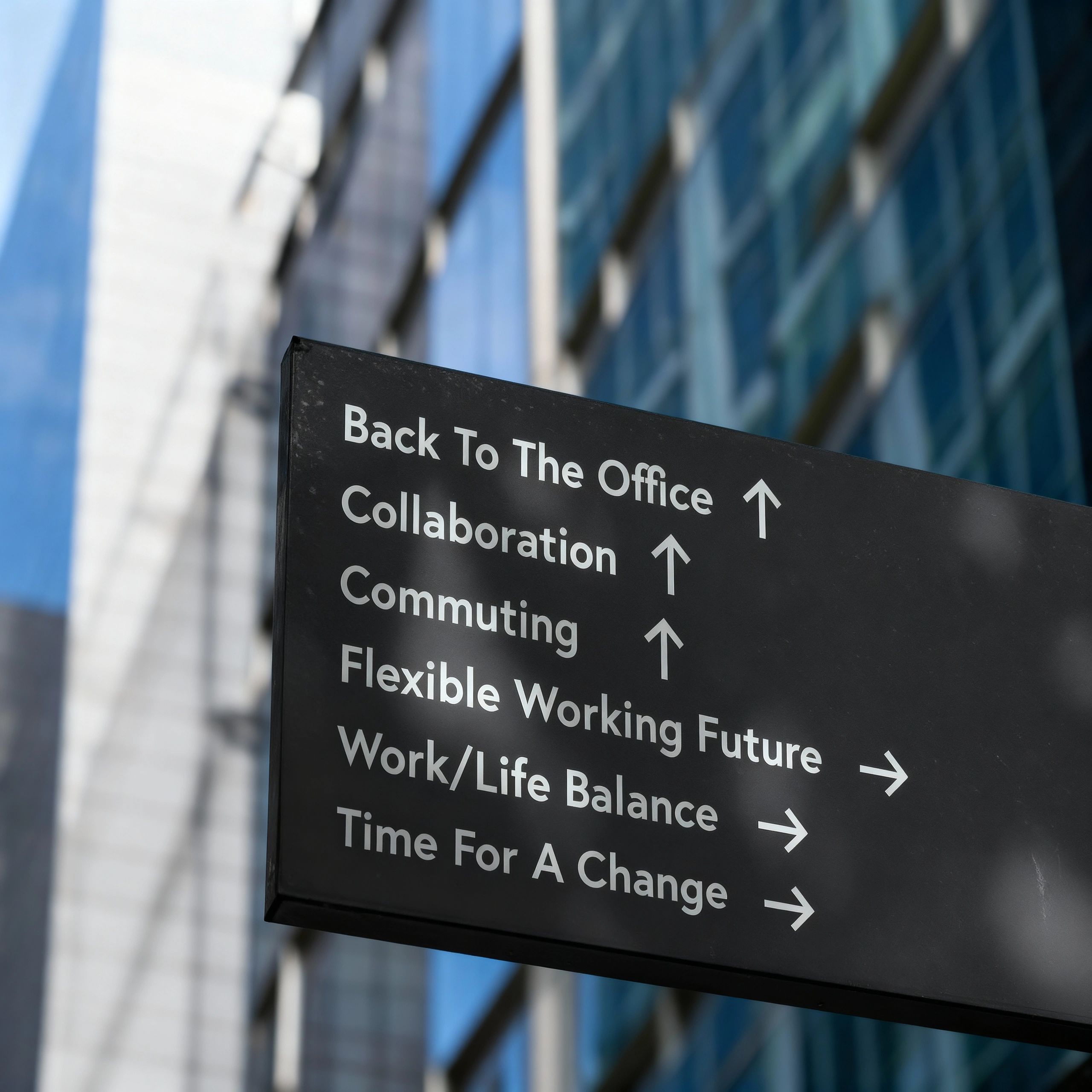
Perhaps the most profound shift is conceptual: from retirement to renaissance. The word "retirement" implies withdrawal, cessation, ending. But in an AI age, leaving traditional employment might mark a beginning—a renaissance of human creativity and purpose.
Imagine a future where AI handles production, analysis, and optimization, freeing humans for exploration, creation, and connection. Where instead of working for 40 years then stopping, we cycle through periods of contribution, learning, creation, and restoration throughout century-long lives. Where retirement planning means designing a life of continuous growth rather than managing decline.
This isn't utopian fantasy—it's a practical necessity. As AI accelerates, we can't simply tweak existing retirement models. We need fundamental reimagination.
The Questions We Must Answer
As we stand at this inflection point, several questions demand answers:
- How do we maintain human dignity and purpose when machines outperform us?
- How do we distribute AI-generated wealth fairly while incentivizing innovation?
- How do we help current workers transition without abandoning them?
- How do we prepare young people for careers that don't yet exist—or may never exist?
- How do we create meaning in a post-work world?
These aren't just policy questions—they're personal ones. Each of us must grapple with what retirement means when work itself is being redefined.
A Call for New Narratives
The stories we tell about retirement shape how we plan for it. The dominant narrative—work hard, save money, retire at 65—was revolutionary for the Second Industrial Revolution but is dangerously obsolete for the Fourth.
We need new narratives that acknowledge AI's disruption while maintaining human agency. Stories that celebrate continuous growth over cliff-edge retirement. That value contribution beyond traditional employment. That see aging as accumulation of wisdom rather than decline of productivity.
These narratives must be inclusive. The lawyer displaced at 55 needs a different story than the factory worker automated at 35 or the young graduate entering a jobless economy. Women facing caregiving gaps need different models than men with uninterrupted careers. Communities of color facing wealth gaps need different strategies than those with generational assets.
Conclusion: The Future of Being Human
The question "How do we modernize our economy in the wake of AI?" ultimately becomes "How do we modernize our conception of human value and purpose?"
Retirement as our grandparents knew it is ending. But something more interesting might be emerging: a future where humans are freed from drudgery to pursue meaning, where creativity trumps productivity, where wisdom appreciates with age, where contribution takes countless forms.
This transition won't be smooth. Millions will face displacement, identity crises, and economic hardship. Traditional retirement planning will fail many who followed all the rules. But within this disruption lies opportunity—to reimagine not just retirement but the entire arc of human life.
For those of us planning for the future, the imperative is clear: stay flexible, build multiple forms of capital (financial, social, creative, spiritual), and prepare for a world where retirement might mean transformation rather than cessation.
The Fourth Industrial Revolution isn't just changing how we work—it's changing why we exist. And that might be the most liberating revolution of all.
As we navigate these unprecedented changes, remember that retirement planning is no longer about predicting a fixed future but preparing for multiple possibilities. The game has changed, and we need new strategies to win it. The question isn't whether you'll retire in the traditional sense, but how you'll continue contributing, creating, and finding meaning in an AI-transformed world.
Additional Resources and References
Historical Context and Industrial Revolutions
- World Economic Forum: The Fourth Industrial Revolution
- Britannica: Industrial Revolution
- Social Security Administration: Historical Background
AI and Future of Work
- McKinsey Global Institute: The Future of Work in America
- MIT Work of the Future
- Brookings Institution: AI and the Economy
- Goldman Sachs: The Potentially Large Effects of AI on Economic Growth
Retirement Planning and Research
- Center for Retirement Research at Boston College
- Employee Benefit Research Institute
- Transamerica Center for Retirement Studies
- National Institute on Retirement Security
Policy and Economic Solutions
- Stanford Basic Income Lab
- Aspen Institute: Future of Work Initiative
- OECD: Future of Work
- International Labour Organization: Future of Work
Gender and Retirement
- Women's Institute for a Secure Retirement
- National Women's Law Center: Women and Retirement
- GAO Report: Women and Retirement Security
Longevity and Life Design
Note: All links were verified as of November 2025. Given the rapidly evolving nature of AI and its impact on work and retirement, we recommend checking for the most current research and policy developments from these organizations.